Processes
- process can be though of as a container to hold the resources of a running program
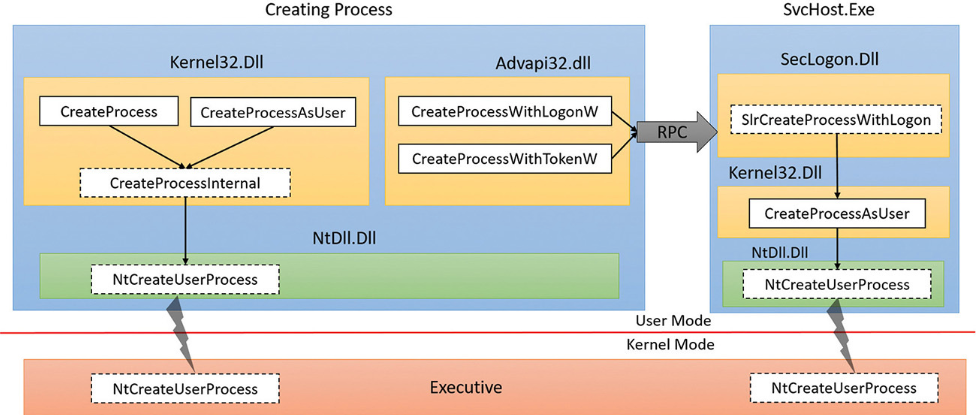
CreateProcessW : API that creates a process that will have the aame access token as the calledCreateProcessAsUserW : API that creates a process using alt access tokenCreateProcessWithLogonW : API that can create a process using a user's plaintext credentials- Each of the above APIs calls into the
NtCreateUserProcess kernel function
Threads
- a type of object that Windows schedules for execution within a process
- holds the state of the CPU, including its registers; and a call stack, which is the set of CPU instructions to execute
- API:
-
CreateThread
-
CreateRemoteThread : creates new thread in another process
- Both of the above APIs calls into
CreateRemoteThreadEx which then calls NtCreateThreadEx kernel function
Memory
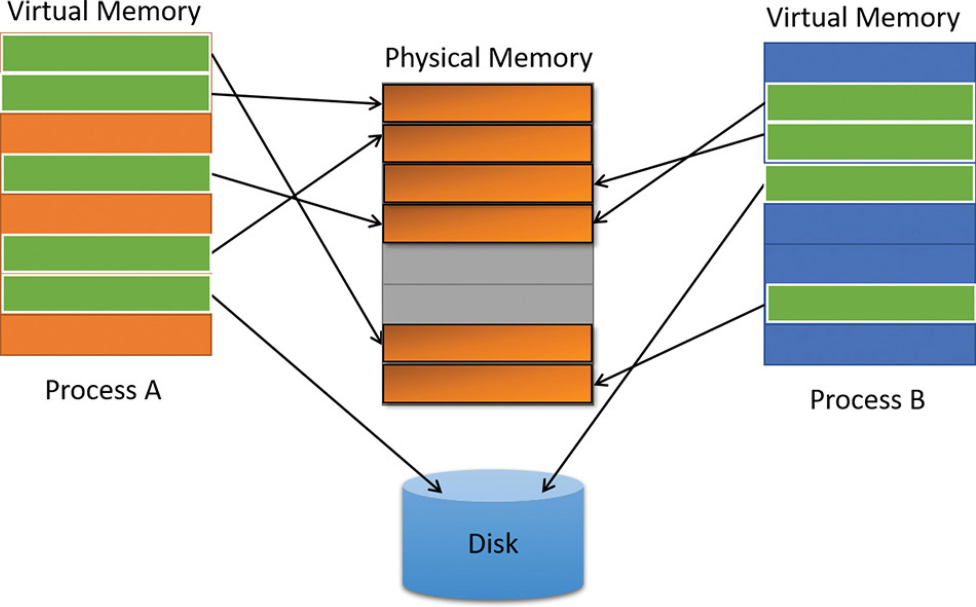
- Memory management is performed on distinct chunks, called
pages
- pages can be small (4KB) or large (2MB)
- API:
- Virtual: lower-level and include
VirtualAlloc, VirtualFree, VirtualProtect
- Heap:
HeapAlloc, HeapReAlloc, HeapFree. Used to manage memory allocations smaller than a page
- Memory-mapping:
CreateFileMappingA, OpenFileMappingA, MapViewOfFile. Used to map memory from disk and share mappings across processes
Access Tokens
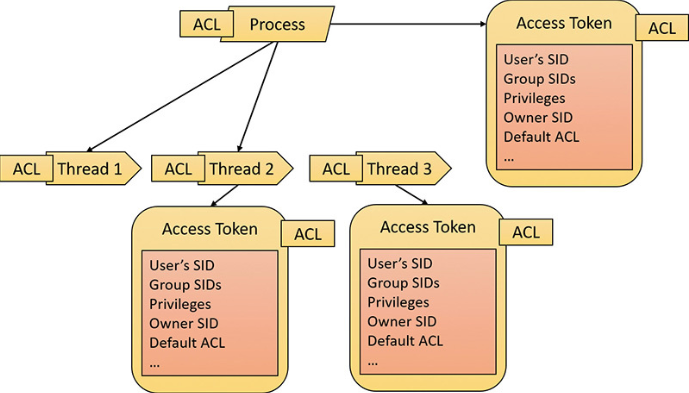
- primary access token is given to a process when spawned
- threads dont have specific access token assigned to them by default
- thread can impersonate access token of another user and the work performed by that thread will be under the security context of that impersonated user
- Every object in Windows has a Discretionary Access Control List (DACL) which specifies who has access to what object
Privileges
SeDebugPrivilege : obtain read/write handles to any process, even those owned by other users or SYSTEM.SeTakeOwnershipPrivilege : take ownership of any securable object including files, handles, and threads.SeRestorePrivilege : replace any file system SeLoadDriverPrivilege : load a device driver into kernel SeCreateTokenPrivilege : create arbitrary access tokens to impersonate any user with any privilege and any domain group membership.
Termination
ExitProcess is called by a program to terminate itself = graceful terminationTerminateProcess is called to terminate another process = ungraceful termination