6.3 Describe the function of common networking components
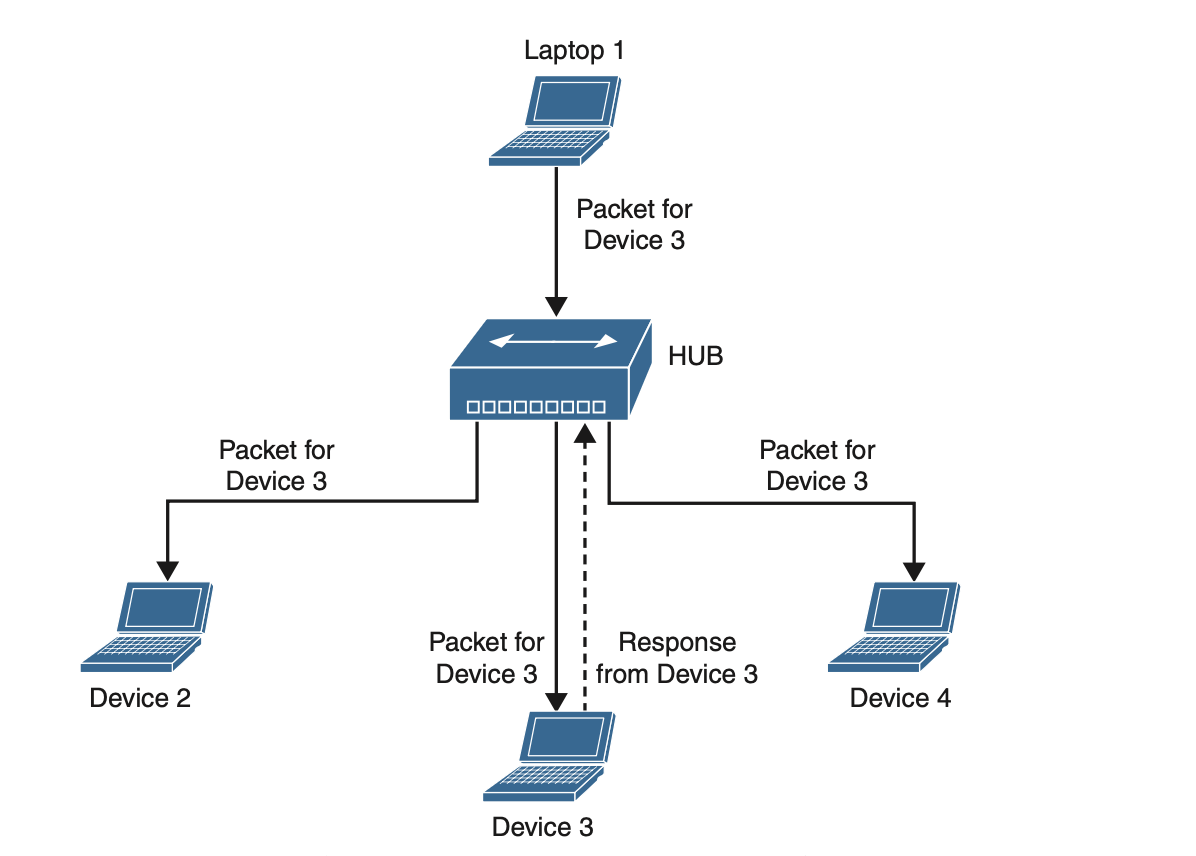
Hub
- not intelligent, does not route traffic, simply repeats it
- every device receives every frame
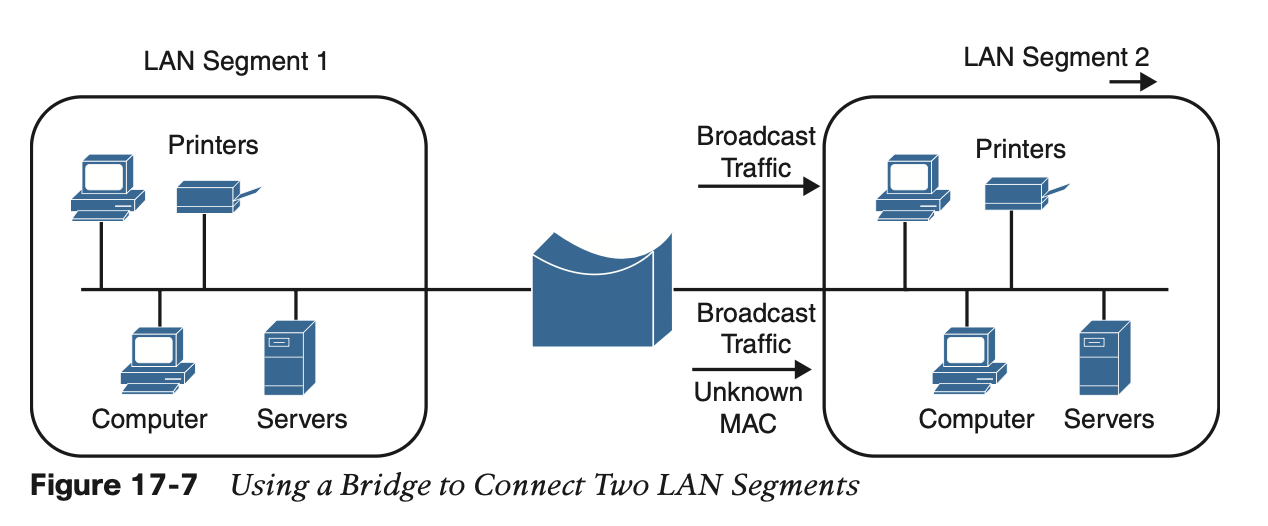
Bridges
- also not intelligent
- connects 2 physical network segments that use the same protocol
- builds a MAC address table of all devices that are connnected on its ports
- if bridge is unable to find target address on the side it received traffic it forwards the traffic across the bridge, hoping it will be on other side
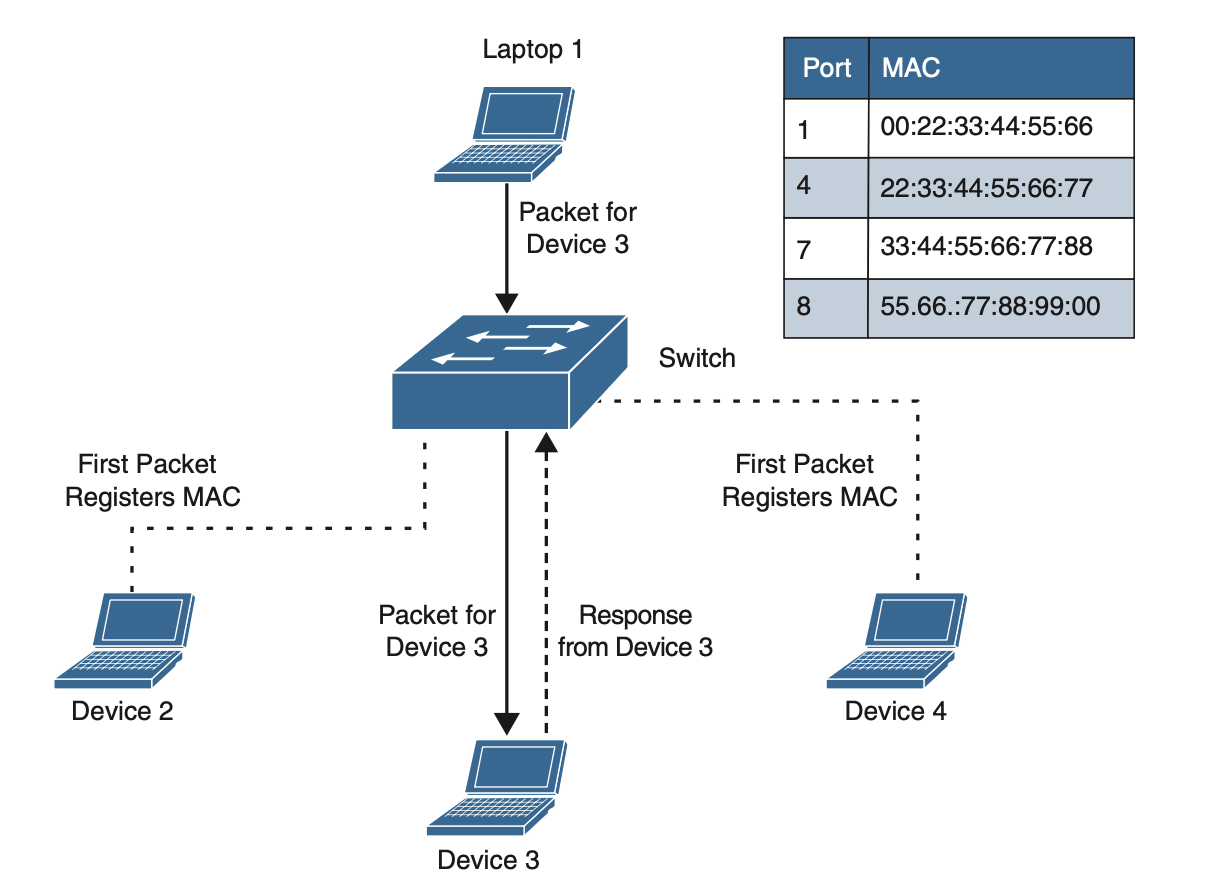
Switches
- the intelligent Hub
- analzyes traffic and builts a port-to-MAC address table
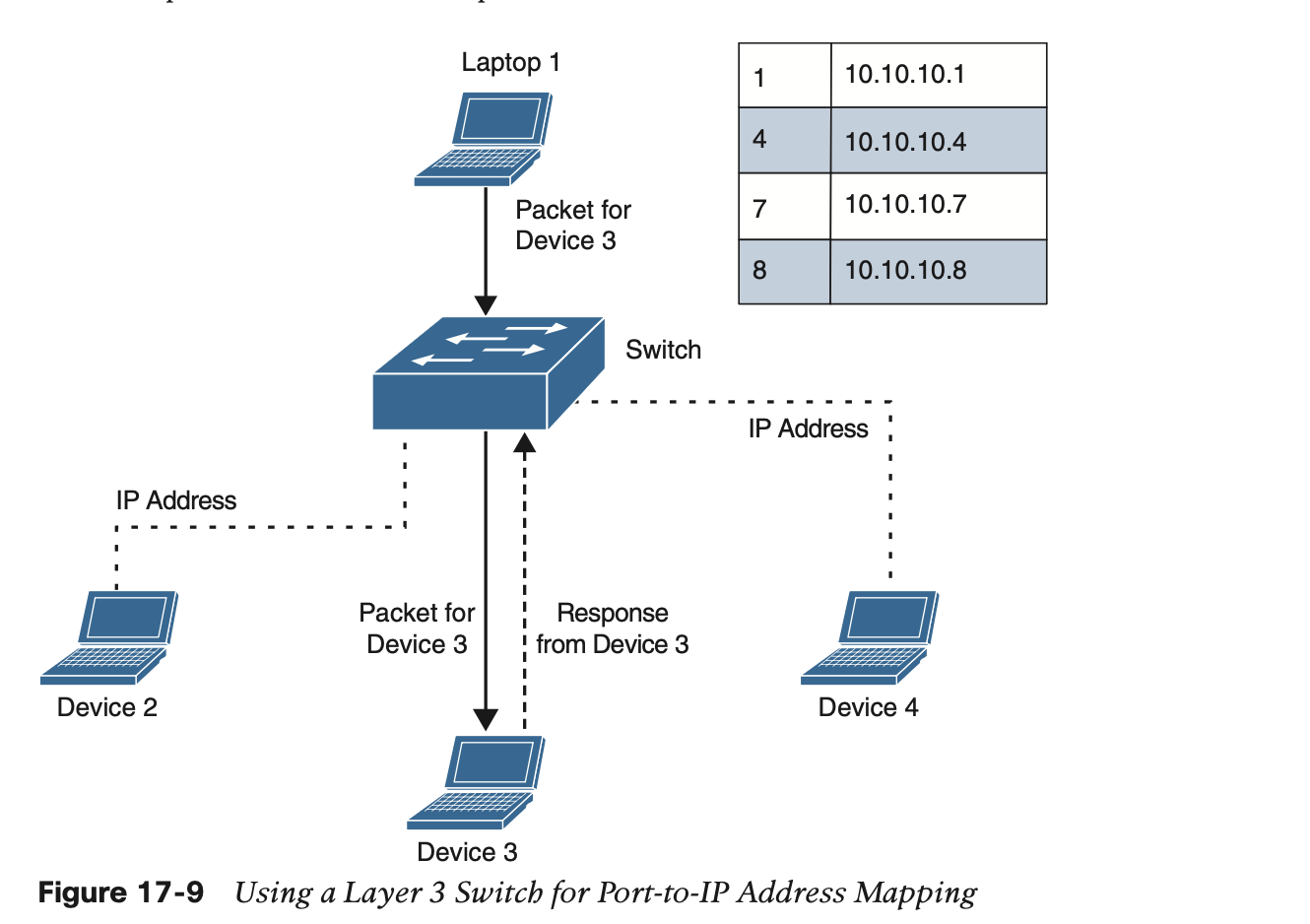
- Layer 3 switches build a port-to-IP table and works at the network layer
| Layer 2 Switch | Layer 3 Switch |
Operates at Layer 2 (data link) of the OSI model | Operates at Layer 3 (network layer) of the OSI model |
| Uses MAC addresses for forwarding | Uses IP addresses for forwarding |
| Performs Layer 2 switching only | Performs both Layer 2 and Layer 3 switching |
Can be used to reduce traffic security on the local network | Can be used to implement a virtual local-area network (VLAN) |
| Has a single broadcast domain | Has multiple broadcast domains |
Routers
- routers network traffic between networks where L3 switches operate within a single network
- can optimize the best path with protocols sich as RIP, OSPF, and BGP
- Functions:
Network segmentation: uses NAT to map private IP addresses to publicIP Address management: uses DHCP to assign IP addresses to devices that connect to networkFirewalls: blocks traffic from unauthorised users. Can block on specific ports such as HTTP or SSH etcDomain name proxy: interacts with cloud DNS servers to resolve DNS queries. The queries/hosts can be stopped at the source if they are deemed harmful